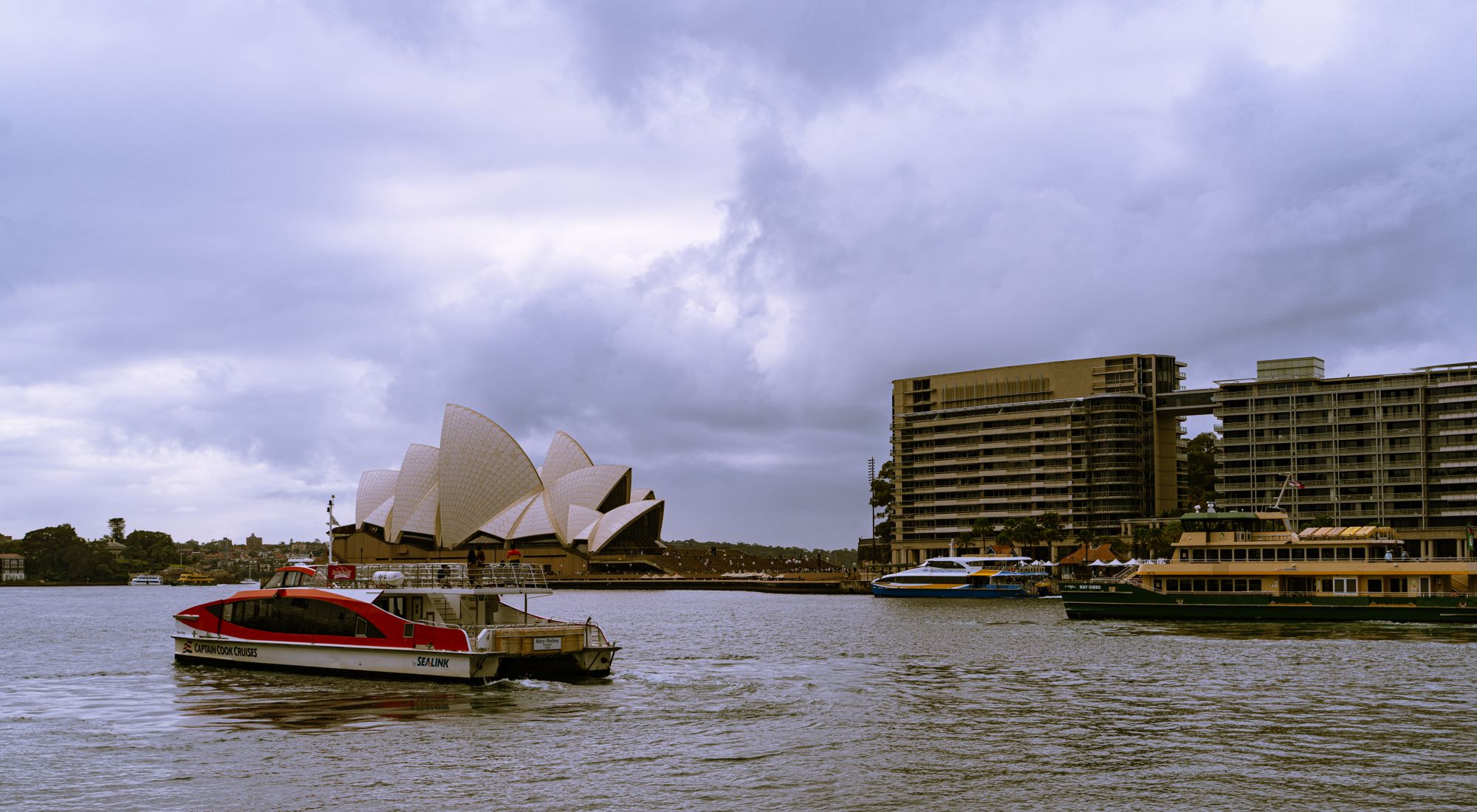
Australia is both at the same time. That's why the question keeps coming up so often. It's a country, the Commonwealth of Australia, with six states and two territories. And it's also the continental mass that gives the continent its name. The confusion doesn't come from geography: it comes from how it's taught in each language.
The short answer
Australia is a sovereign country located on most of its own continental plate. That plate, along with Tasmania and New Guinea, forms the continent. In English textbooks, that continent is called Australia. In Spanish textbooks, it is usually called Oceanía, which is a broader concept.
So if you were asked this in school in Spain or Latin America, you would most likely be taught about Oceania. If you search for it in English, you will find Australia. Both answers are correct within their own system.
Why Spanish says Oceania and English says Australia
There is no global authority that decides how many continents there are or what their names are. Each educational tradition has established its own model and stuck with it.
- The five-continent model is the one of the Olympic rings. It includes Africa, America, Asia, Europe, and Oceania. Antarctica is excluded because it has no permanent population.
- The six-continent model is the most common in Spain and Latin America. This model adds Antarctica and keeps America as one.
- The seven-continent model is the Anglo-Saxon model. It separates North America from South America, and uses the name Australia for the continent, instead of Oceania.
The practical difference is this. Oceania is a large geographical region that includes the Australian continent along with Melanesia, Micronesia, and Polynesia, with about fourteen countries. Australia is the continental mass. In other words: Oceania contains Australia, and not the other way around.
What exactly does the continent include?
Geologically, the continent does not end at the Australian coast. The continental shelf is shallow and connects three pieces that were connected by land during the glaciations: the Australian mainland, Tasmania, and New Guinea, which today divide Papua New Guinea and Indonesia.
Geologists call this group Sahul. New Zealand, on the other hand, is not part of it: it is on another plate, Zealandia, separated by deep waters. This is a detail that surprises many people, because we culturally associate the two countries.
So is it an island or a continent?
Technically it meets the definition of an island: land surrounded by water on all sides. But it is not considered an island because its size and its own tectonic plate place it in a different category. The usual convention is that Greenland is the largest island in the world and Australia, the smallest continental mass. The boundary between these two categories is a decision of geographers, not a physical fact.
To give you an idea of the size
Comparisons help more than bare numbers when we talk about a continental mass:
- Australia occupies almost three-quarters of the entire surface of Europe.
- That's about fifteen times Spain and about ten times Chile.
- From Perth to Sydney there is just over three thousand kilometers, approximately the distance that separates Madrid from Moscow. By plane it's about five hours.
And despite that size, there are more than twenty-seven million people living there, almost all of them concentrated in the coastal strip in the east and southwest. The interior, what the Australians call the outback, is practically empty.
And if you're thinking of going there
In practical terms, this doesn't change anything about your trip, but it does explain two things that you'll notice. The first is the distances: getting between two Australian cities can be a five-hour flight. The second is the variety of climates, because the country spans from the tropics to cold latitudes.
If you are considering the destination, in our guide on study in Australia You have the routes available based on your level of English and your budget, and on the page cities You can compare how living in each of them is like.
Frequently asked questions
Is Australia a country or a continent?
Both things. It is a sovereign country and occupies most of the continent of the same name, which in Spanish is usually included within Oceania.
What is the difference between Australia and Oceania?
Australia is the continental mass and the country. Oceania is the broader geographical region that includes Australia along with Melanesia, Micronesia, and Polynesia.
Is New Zealand on the Australian continent?
No. New Zealand is located on Zealandia, a distinct continental plate that is mostly submerged. It belongs to Oceania, but not to the Australian continent.
How many continents are there?
It depends on the model. Five in the Olympic tradition, six in the Spanish-speaking teaching system and seven in the Anglo-Saxon one. There is no single official answer.